Learning about Lithium-ion Button Cell Batteries

 1. Basic introduction of lithium-ion button battery

Button lithium-ion battery is a rechargeable battery that uses lithium ions as charge carriers. It consists of positive electrode, negative electrode, electrolyte and diaphragm. The positive electrode usually uses lithium compounds, such as lithium cobalt oxide, lithium iron phosphate, etc. The negative electrode generally uses graphite material. The electrolyte is an organic solution containing lithium salts that can provide a medium for ion transmission. The diaphragm is used to isolate the positive and negative electrodes to prevent short circuits.

In-depth! Detailed explanation of lithium-ion battery formation technology

In-depth! Detailed explanation of lithium-ion battery formation technology

Lithium-ion battery production requires formation to achieve electrode wetting and full activation of electrode materials. During the first charge, as lithium ions are embedded in the negative electrode, the electrolyte components undergo a reduction reaction at the negative electrode to form a stable solid electrolyte interface film (SEI film) to prevent irreversible consumption of electrolyte and lithium ions in subsequent cycles.


Therefore, this technology is of extraordinary significance to battery performance. The effect of formation directly affects the subsequent performance of lithium-ion batteries, including storage performance, cycle life, rate performance and safety. This article focuses on the technical parameters/methods of formation and its impact on battery performance.

Why do electrodes crack during lithium battery coating? How to solve it?

Why do electrodes crack during lithium battery coating? How to solve it?

1. Detailed reasons for the cracking of the pole piece


1. Slurry problem


   The slurry viscosity is not suitable:

     - Viscosity is too high: The slurry has poor fluidity, making it difficult to spread evenly during coating and prone to cracking.

     - Viscosity is too low: The slurry tends to flow, resulting in uneven coating thickness and cracking after drying.


  Uneven slurry dispersion:

     - Active materials, conductive agents and binders are not fully dispersed, resulting in local stress concentration.

     - Agglomerated particles exist in the slurry, forming weak points during coating.

Lithium battery principle, formula and process flow

Lithium battery principle, formula and process flow

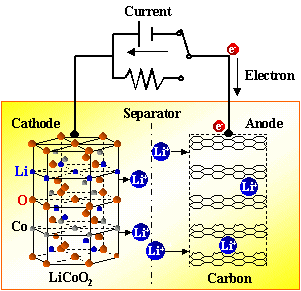
Lithium-ion battery is a secondary battery (rechargeable battery) that mainly relies on the intercalation and deintercalation of Li+ between two electrodes. With the continuous development of downstream industries such as new energy vehicles, the production scale of lithium-ion batteries is expanding. This article takes lithium cobalt oxide as an example to comprehensively explain the principle, formula and process flow of lithium-ion batteries, the performance and testing of lithium batteries, production precautions and design principles.


1. The principle, formula and process flow of lithium-ion batteries;

1. Working Principle

1. Positive electrode structure

LiCoO2 + conductive agent + binder (PVDF) + current collector (aluminum foil)

 2. Negative electrode structure

Graphite + Conductive agent + Thickener (CMC) + Binder (SBR) + Current collector (Copper foil) 


Research progress on pre-lithiation types of silicon-based anodes and compatible binders

Research progress on pre-lithiation types of silicon-based anodes and compatible binders

Pre-lithiation of silicon-based anode

Preface

With the development of society and the advancement of science and technology, energy consumption is increasing day by day, environmental pollution is also becoming increasingly serious, and has seriously threatened the future survival of mankind. Therefore, it is urgent to develop clean and environmentally friendly renewable energy. However, most renewable energy sources such as wind energy and solar energy are unstable and intermittent, while batteries can directly convert chemical energy into electrical energy, which is not only stable but also has high energy conversion efficiency, which can effectively alleviate the energy pressure we are facing now. Among them, lithium-ion batteries have been rapidly developed due to their advantages such as high energy density, long cycle life, and environmental friendliness, and are widely used in the fields of electronic products and electric vehicles.


Lithium battery-material-diaphragm technology route and development

Lithium-ion batteries are mainly composed of five parts: positive electrode material, negative electrode material, diaphragm, electrolyte and packaging material. The lithium-ion battery diaphragm is a porous film with uniformly distributed micropores. It is located between the positive electrode material and the negative electrode material of lithium battery. It plays a role in preventing direct contact between positive and negative electrodes, preventing battery short circuit and transmitting ions. It is a key material to ensure battery safety and affect battery performance. Although the diaphragm does not directly participate in the electrochemical reaction of the battery, its performance affects the interface structure, internal resistance and other properties of the battery, and thus affects the battery's energy density, cycle life and rate performance; the thermal stability of the diaphragm also determines the battery's operating temperature tolerance range and battery safety. An ideal battery diaphragm should have good insulation, mechanical strength, electrochemical stability and thermal stability, as well as high porosity and appropriate pore size, and good wettability and adsorption properties for the electrolyte.

▲Lithium-ion battery (cylindrical) structure and lithium battery diaphragm

Summary of high performance resin materials used in diaphragms!

The diaphragm plays two main roles in lithium-ion batteries. First, the diaphragm material needs to have good insulation and a certain strength to avoid direct contact between the positive and negative electrodes in the battery, and can effectively prevent short circuits caused by punctures such as burrs and dendrites, and ensure that there is no significant dimensional change under sudden high temperature conditions, thereby ensuring the safety of the battery. Second, the porous structure of the diaphragm can provide a good migration channel for lithium ions, ensuring stable and efficient operation of the battery.

Introduction and Synthesis of Lithium Ion Batteries Negative Material

  Introduction and Synthesis of Lithium Ion Batteries Negative Material At present, the negative materials used in lithium-ion batteries are...